
Portable Mutations: Shadow Puppetry Workshop with Min-Jia
by Priscilla Lo
5.11.2025
Shadow puppetry has long evolved through travelling, across dynasties and centuries, regions and continents, masters and generations. Resonantly, artist Min-Jia carries and develops their practice along journeys, transiting from Berlin and Shaanxi to a recent residency in Hong Kong. Over a weekend in early September, their tool cabinet sprawled open upon a communal table, inviting a collective remaking of puppets from the classic Chinese folklore “Legend of the White Snake”. These two days of tangible learning went beyond an exercise of inheritance; it questioned how a rich cultural heritage could translate into radical artistic language, and reenchant the present alongside contingent forces of myth, monstrosity, and folkness.
The figure of the snake guided our way into the shadows, where it shapeshifts, charms, and defies. In prompting the imagination of our fictive serpents, the artist presented a genealogy of transgression, drawing tangents between traditional and popular representations of the reptile. White Snake speaks of a femme fatale who pursues forbidden love with a mortal, challenging the frail boundaries between human and demon, moral and evil.
We flipped through examples of their exquisite puppetry renditions, discovering a playful grammar that emerges from archetypes and antagonism. Oftentimes, the snake is depicted as a woman with flowing serpents as hair, walking through a surreal cave crawling with snakes and insects. The transformative portrayals also find Western parallels, recalling the works of Aubrey Beardsley and Hilma af Klint. In their abstract tableaus, the snake symbolises the wicked and grotesque, the otherworldly and metamorphic. Myriad faces of the snake across storylines constellate. How do we find new configurations and mutations?
We let our fumbling hands take the lead, allowing skin to become our primary interface. Upon touch, we slowly learned about and reshaped the piece of alienated membrane. Initially existing as a large sheet, the artist laboriously pre-cut it into an assortment of heads, torsos, and tails. We freely assembled the offerings, some with multiples of each, while envisioning our versions of whimsical monsters.
To ornament, the carving that followed was more painstaking, requiring patient negotiation with the vellum sheet, which resisted against our needles. We pushed and dragged the pointed tips along the organic surface, breaking through bumps and veins. Coincidental to how snakes grow and emerge from membranes, our serpents gained faces and bodies through skin. In turn, it became a durable carrier of stories, weaving traditional iconographies with personal references.
Returning the next day, we were tasked with colouring, which unfolded in a durational, entropic process. Rather than using readymade pigments, we started with tins and pots. Vibrant powders were heated with handfuls of vellum beads, forming sensitive mixtures that remained closely tended by warm water baths. Applied in thin coats and small dots, strong washes slowly permeated the semi-translucent surfaces, often refusing our attempts to precisely detail. During long hours of painting, the artist shared stories from their apprenticeship in Shaanxi, from the obscure origins of pigments gifted by their teacher, to familial dynamics at the studio. Narratives bubbled, while colours transmuted into hues.
The workshop eventually culminated in a collective activation, gathering us into a makeshift troop. More than the creation of intricate artefacts, puppetry highlights a history of communal liberation. In its early beginnings, shadow puppetry was staged in royal concubines as folk entertainment, temporarily dissolving hierarchy and order in cinematic illusions. Inspired by its subversive humour and melodrama, our serpents slithered into and suspended across the screen, crossing as lovers, enemies, and long-lost families. The illuminated membrane was much forgiving towards errors of manual labour, yet remembered traces of collaborative embodiment and gesticulations. In the radiated space recentring the monster and the Other, we animated marginal dreams and realities.
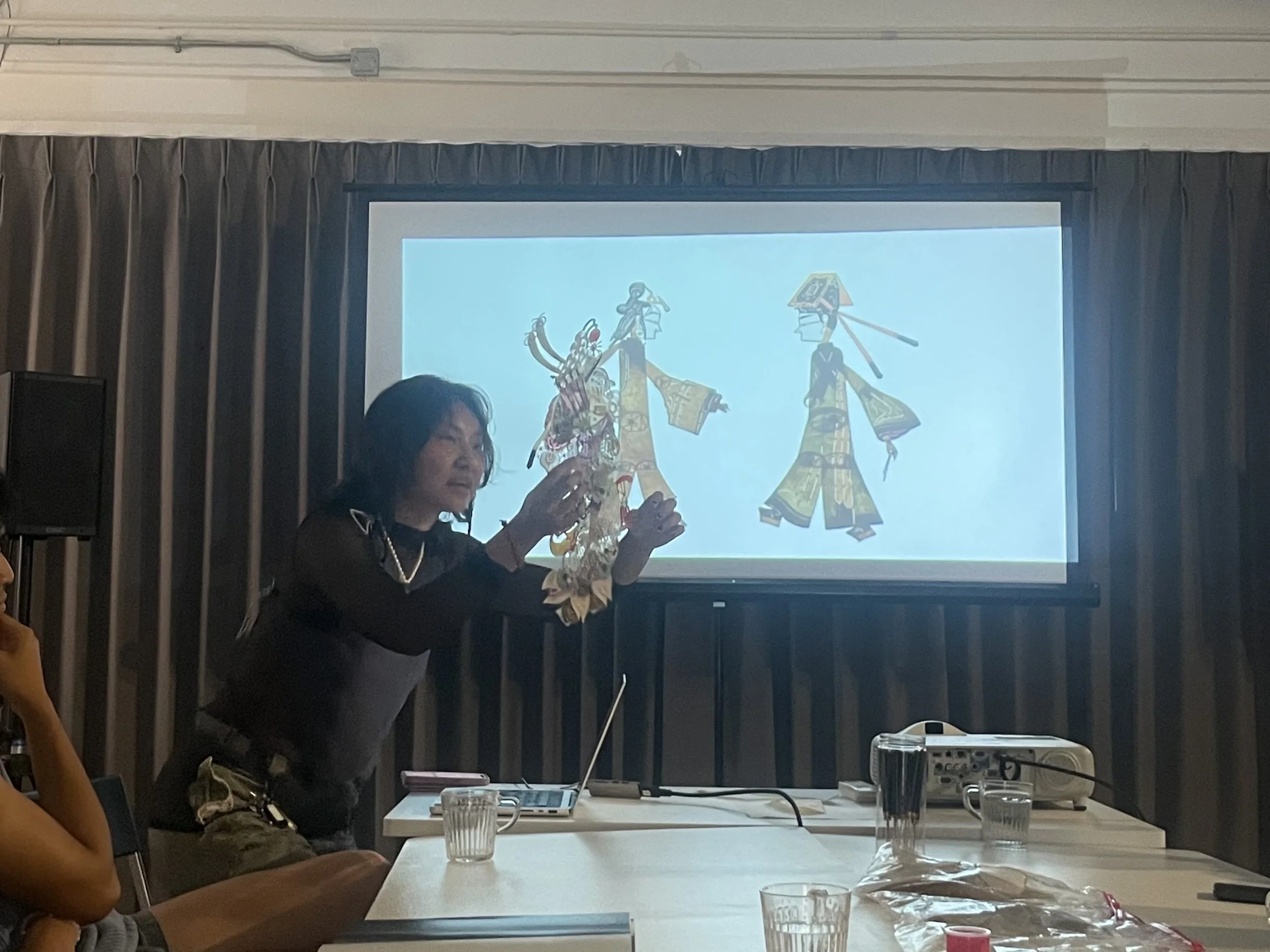
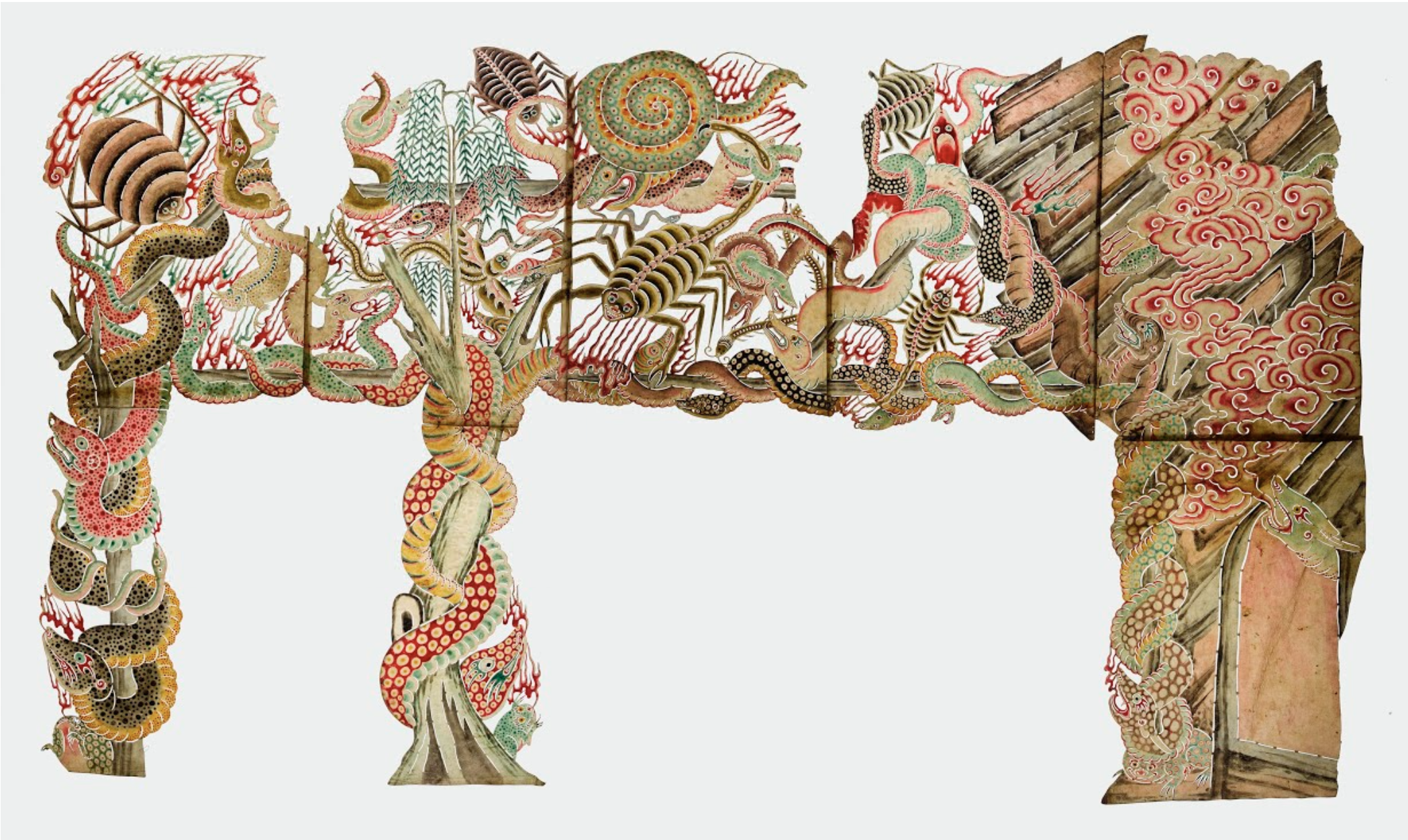
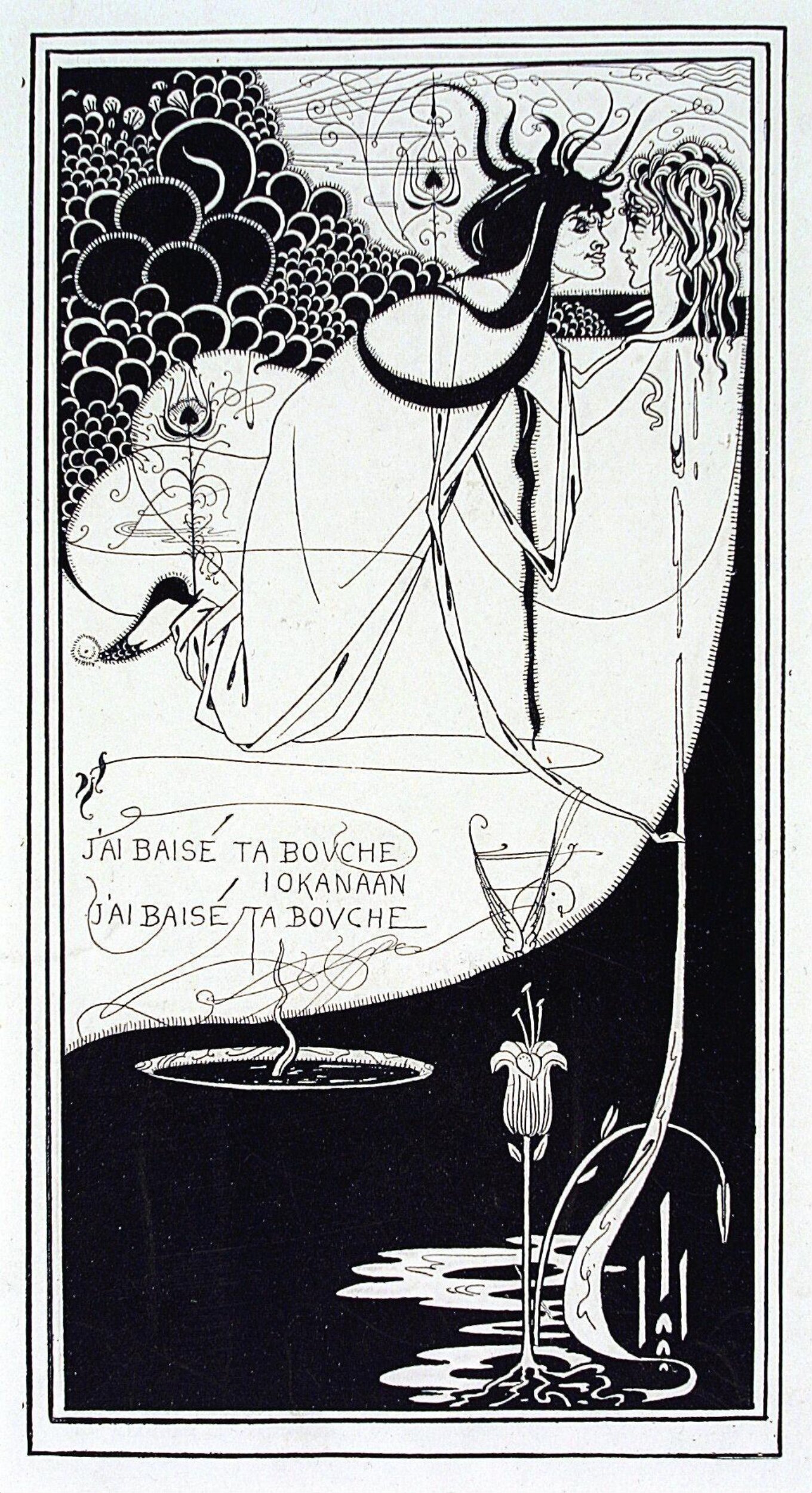
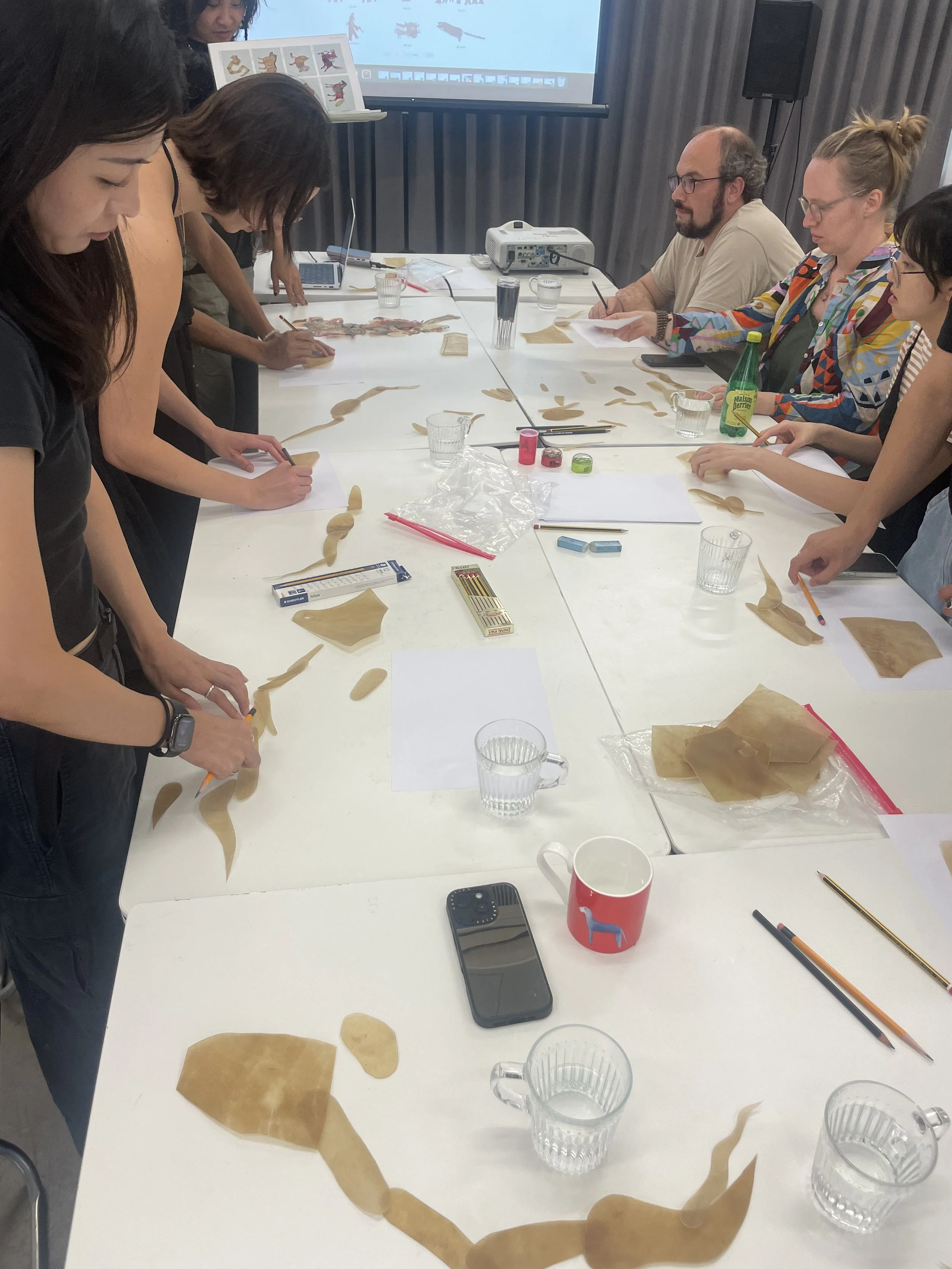
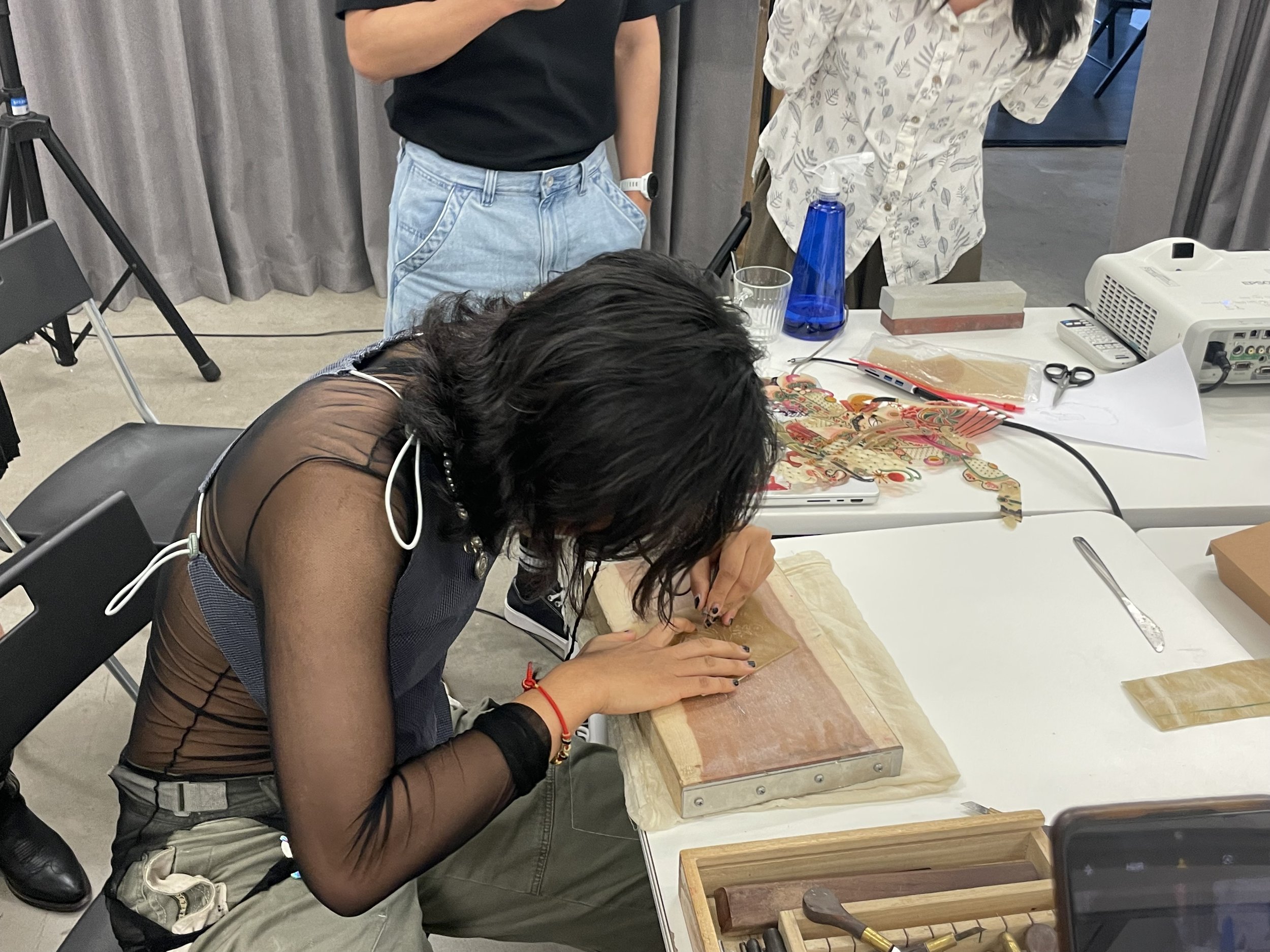
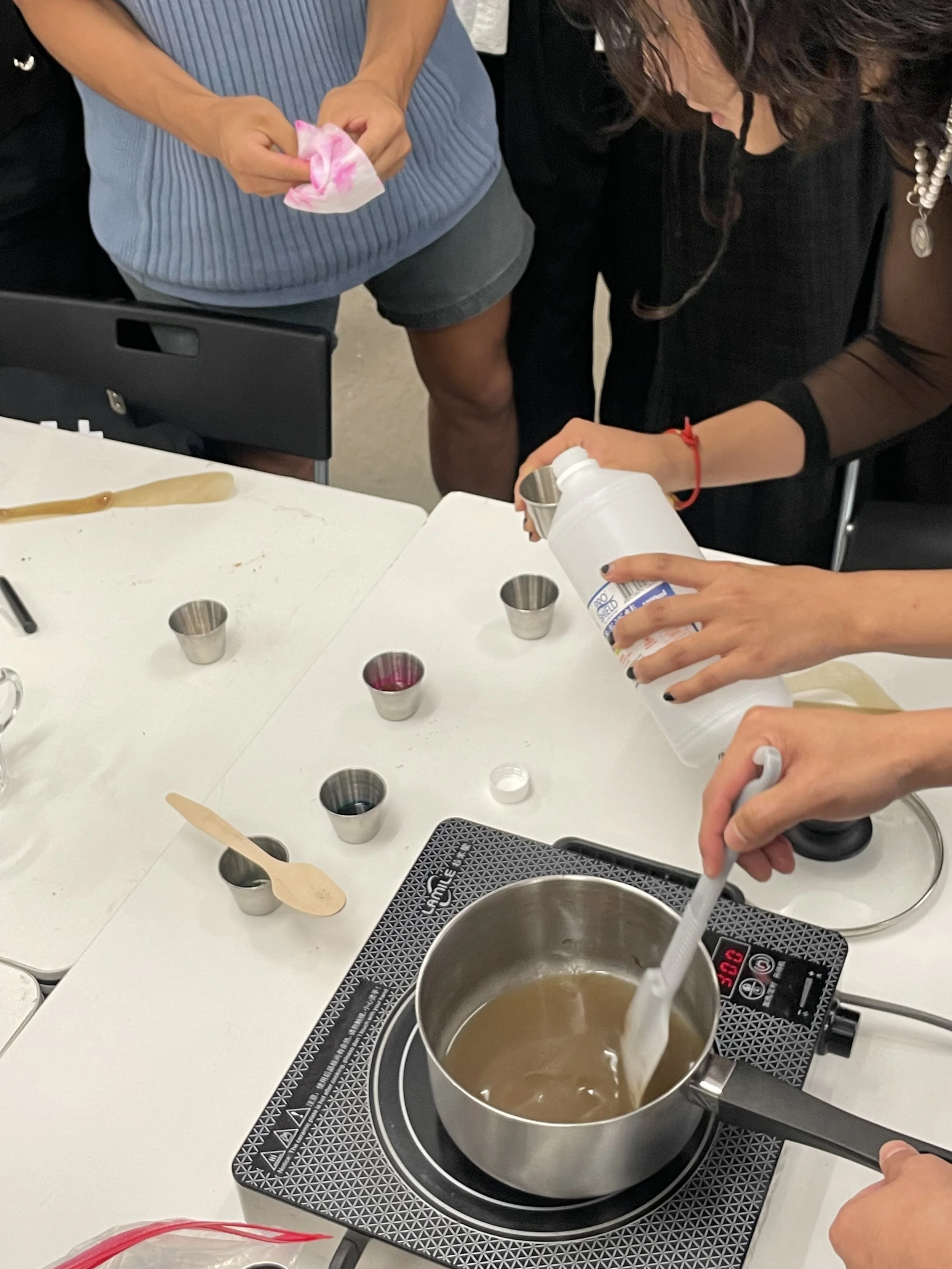
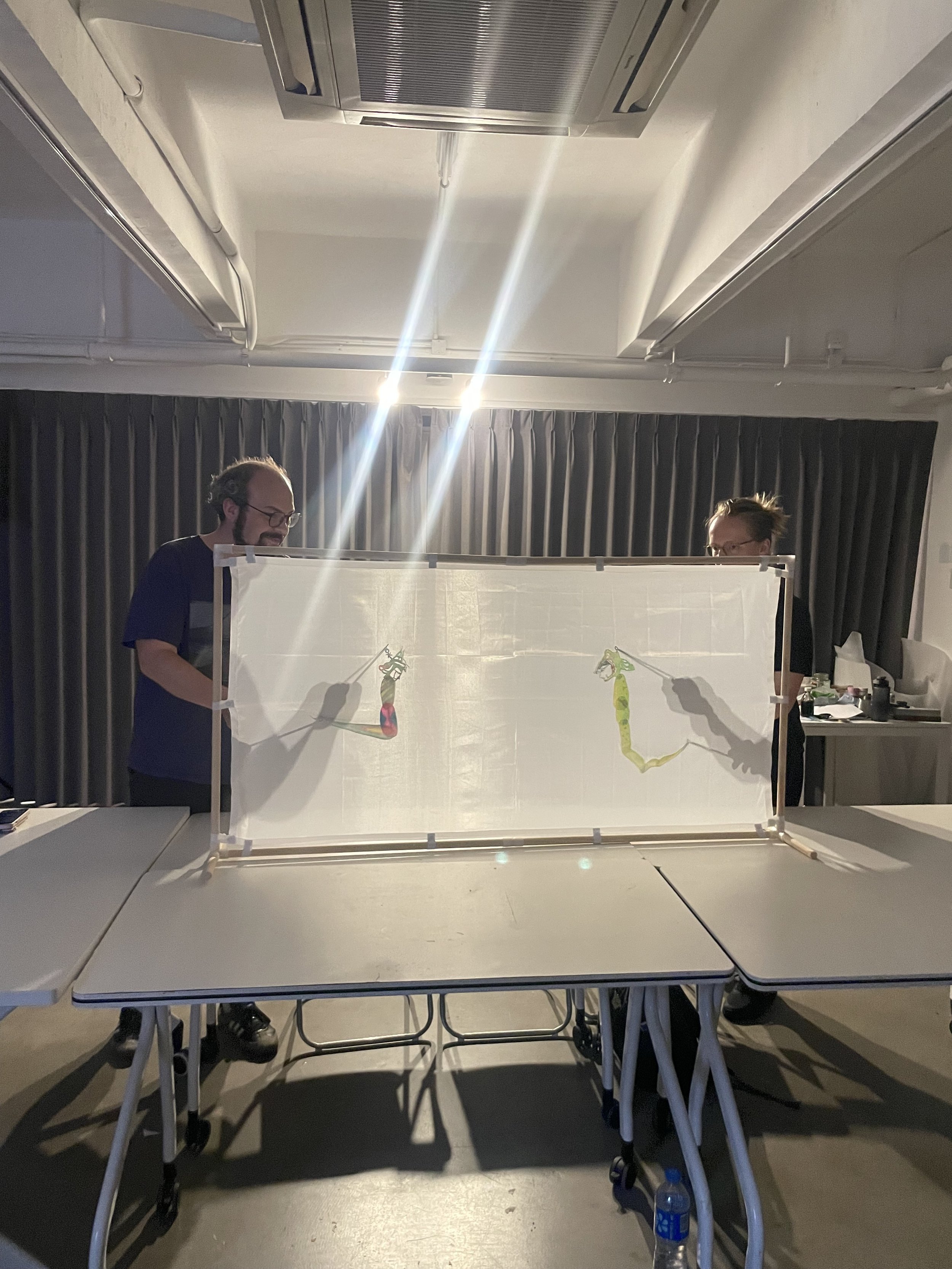
Image captions:
Artist Min-Jia presented an example of a puppet created and gifted by their master Wang Tianwen.
A White Snake's cave scene made in Shaanxi, China. Image courtesy of the artist, the CAFA Art Museum Beijing and Google Arts and Culture. [link]
Aubrey Bearsley, J'ai baisé ta bouche Iokanaan, 1892-93, line block print. Image courtesy of the artist and the V&A Museum. [link]
The group assembled vellum pieces and made drafts.
Artist Min-Jia carved the puppets based on our initial markings with needles.
The group collectively prepared the pigments.
A duo performance concluding the workshop.