
INSIDE HART with Wilson Yip Kaki
On exchange, relationships, and the fine line between wearability and expression.
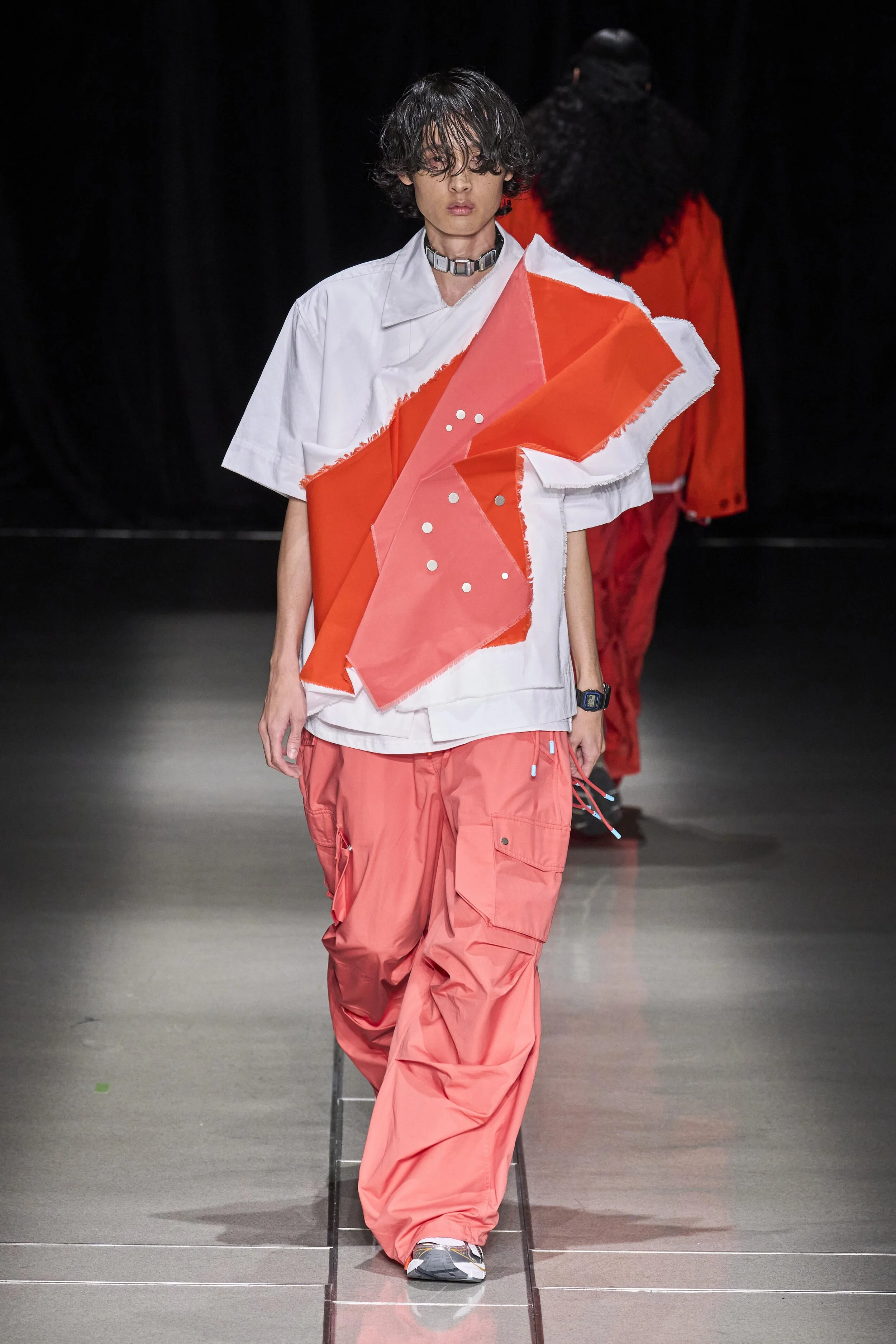
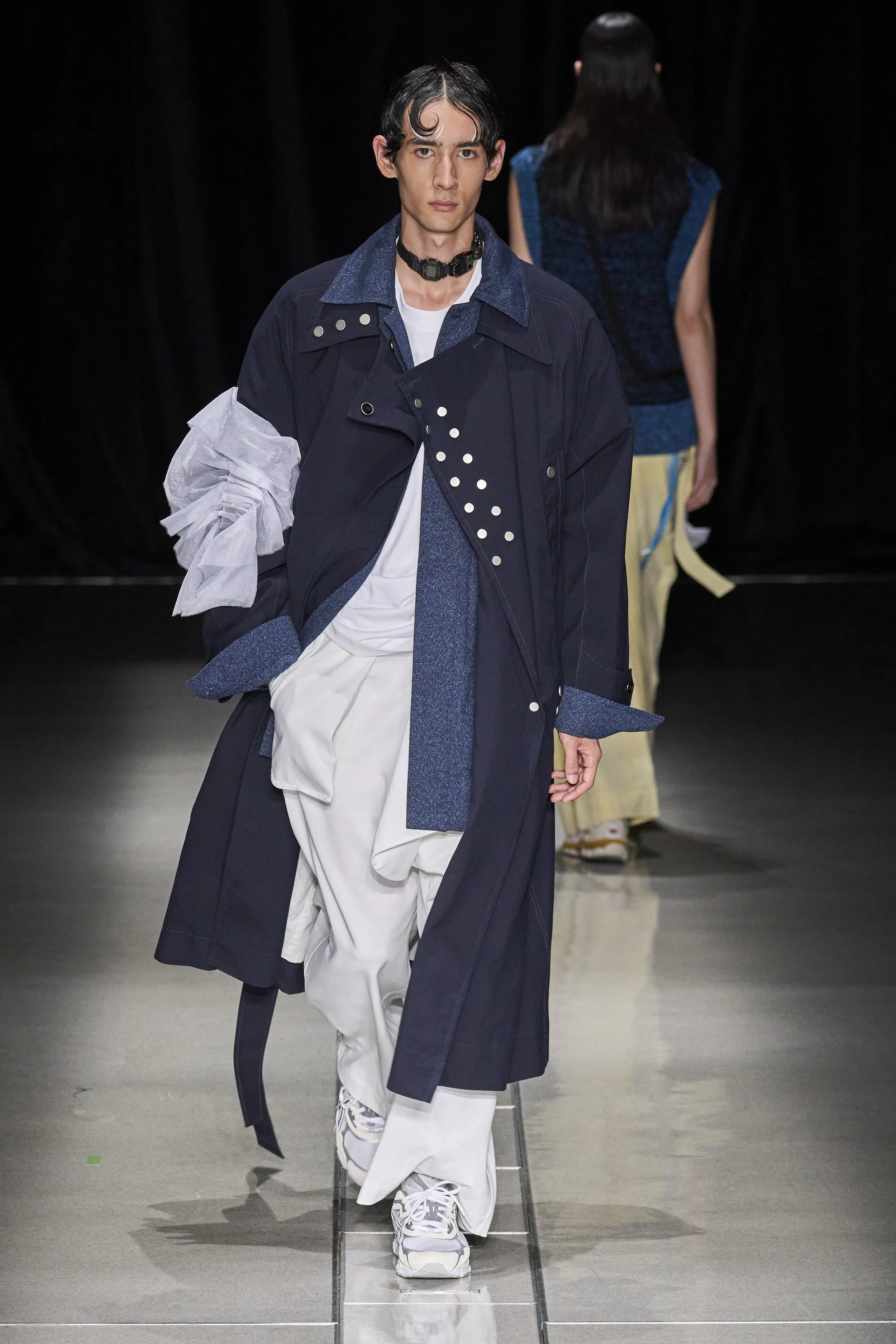
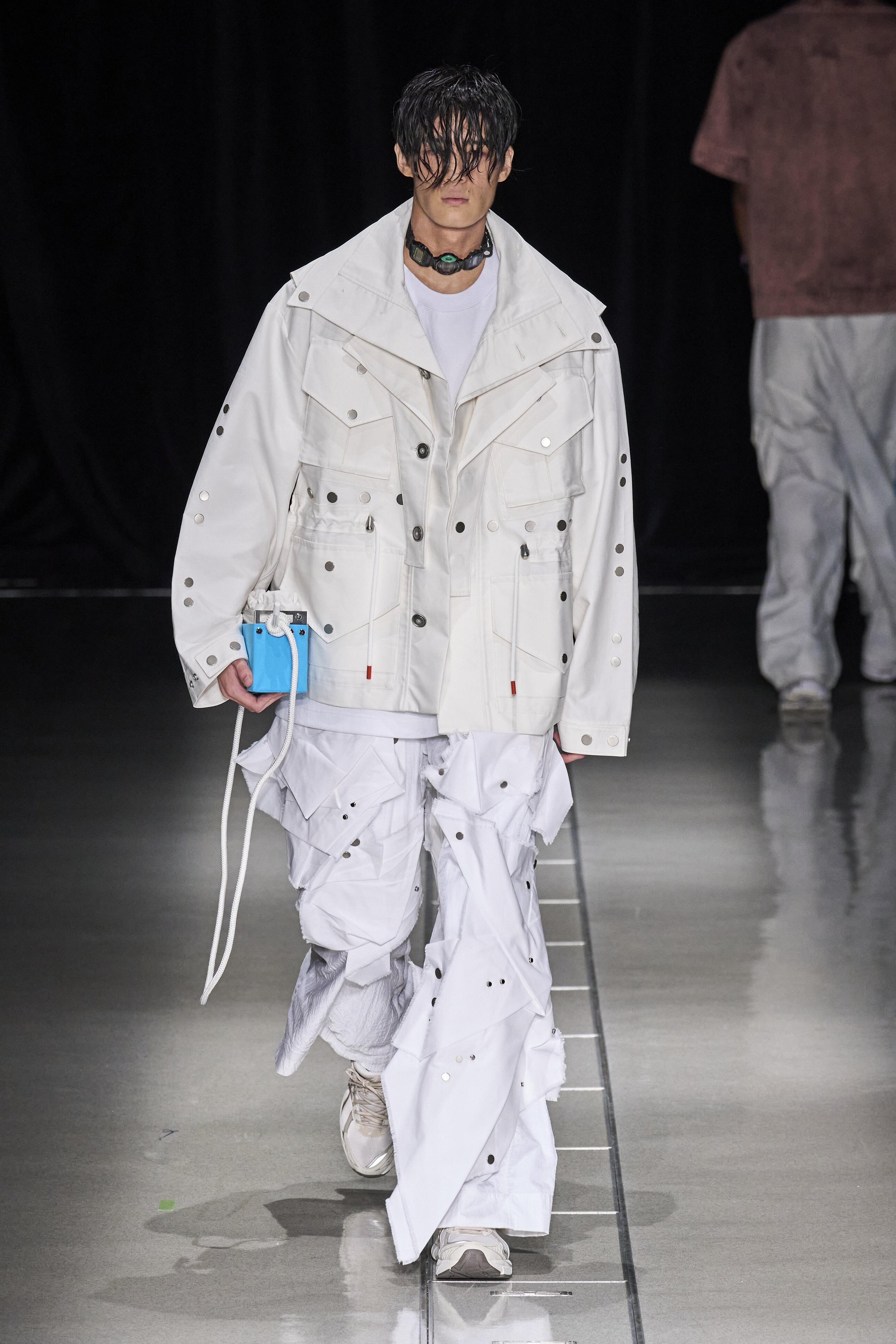
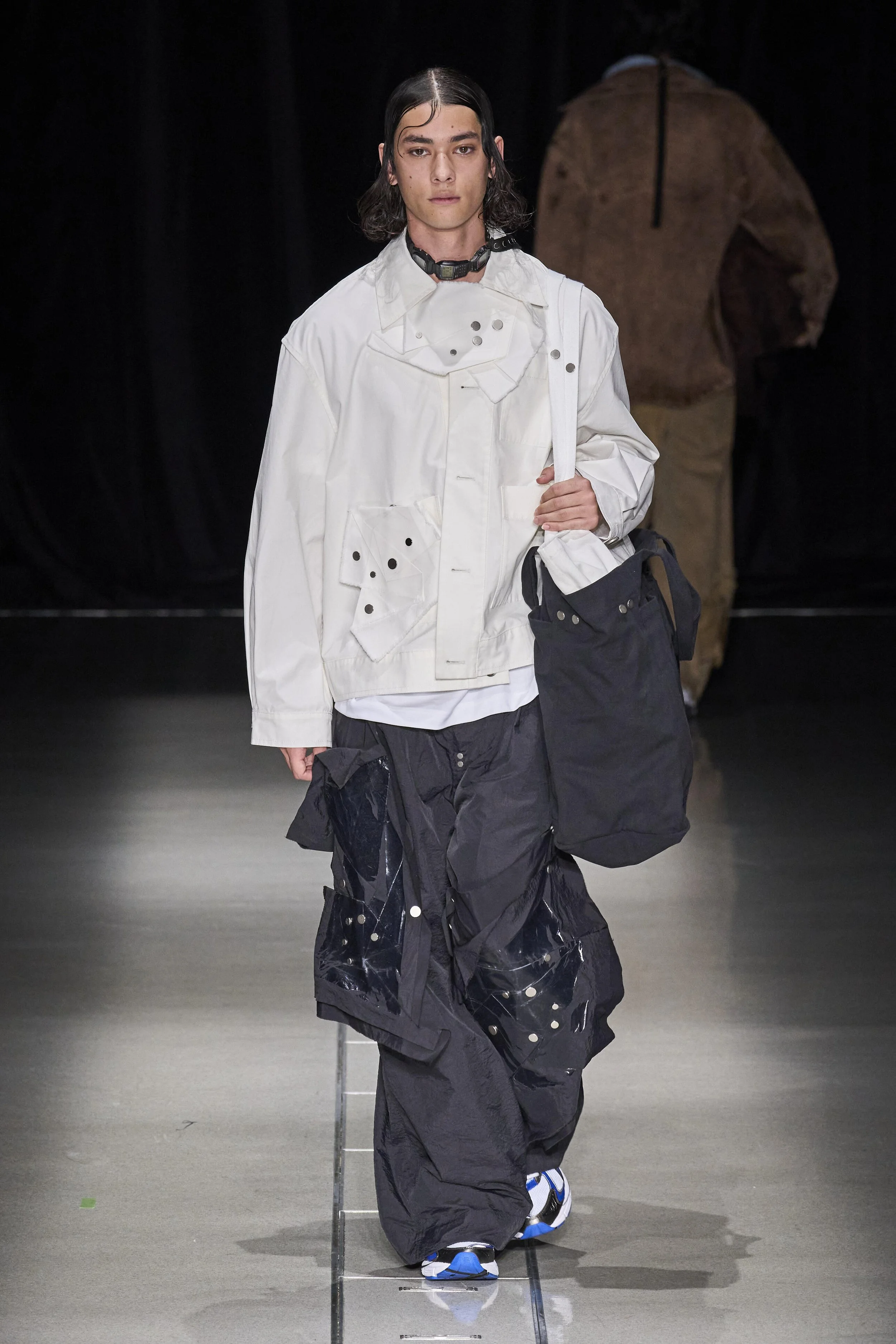
Some of the looks from Wilsonkaki’s 2024 runway.
“I want to find the unusual within the everyday,” fashion designer Wilson Yip Kaki declares, “rather than create something extravagant simply for the sake of being visible.” Outside of his work with HART HAUS, Yip previously worked in the atelier of Japanese brand Maison Mihara Yasuhiro. The experience of working for a brand with an already established community, identity and expectations is undeniably different from running one’s own label, but it teaches practitioners to work under restrictions in the process; which eventually helps practitioners in Yip’s shoes to build the prestige of their own brands later down the line.
“I make products, I make clothes, and people wear it.”
Many designers begin their career with the grand dream of expressing some indescribable feeling or paying homage to a certain semi-forgotten time, space or community. Where many observers in the peanut gallery often believe that the only way for fashion to be expressive is through outlandish, one-of-one couture pieces, Yip’s goal is to tackle utility and fixing everyday problems through his craft. “It’s designing around the body and everyday life. I don’t see that as compromising my creativity, it’s more of a choice of expression.”
There is arguably next to nothing that hasn’t been done in the fashion industry. Right now the scene is split into two groups: those who can afford the expensive version, or those willing to settle for the dupe. Wilsonkaki as a brand gets its identity from function, rather than microtrend-hopping or shock factor, and that thoughtfulness is its unique appeal.
One such example is a currently unreleased pair of trousers, which Yip cites as “one of his signature designs”. “I’m the one who always forgets to zip up my fly,” he elaborates, “and I made a set of magnets to replace the zippers.” Once again Wilsonkaki’s practice circles back to the principles of convenience, with a series of four fully magnetic closures that, in the designer’s own words, can be closed fully hands off. The trousers in question are likely to be released later in the autumn season.

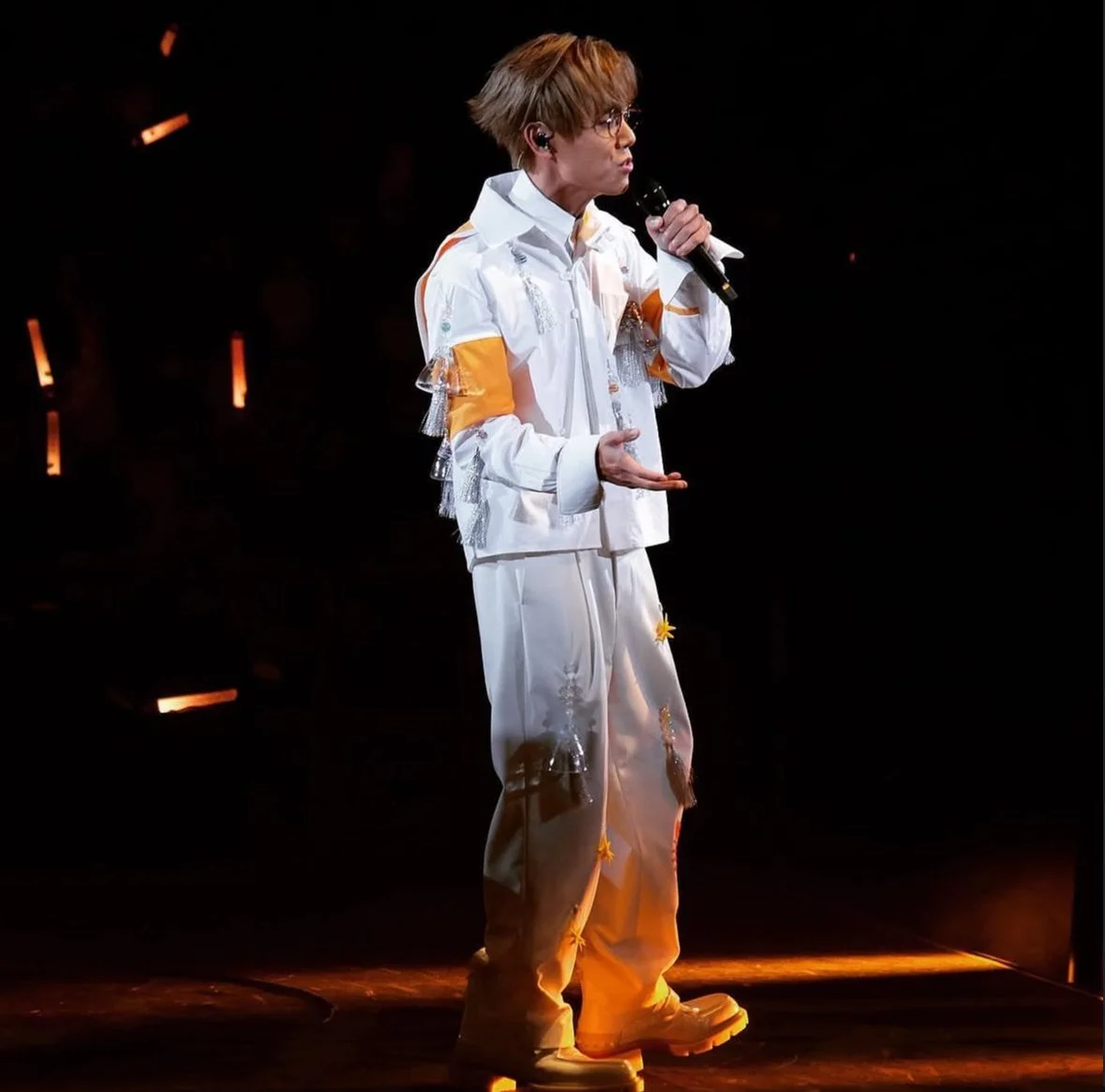
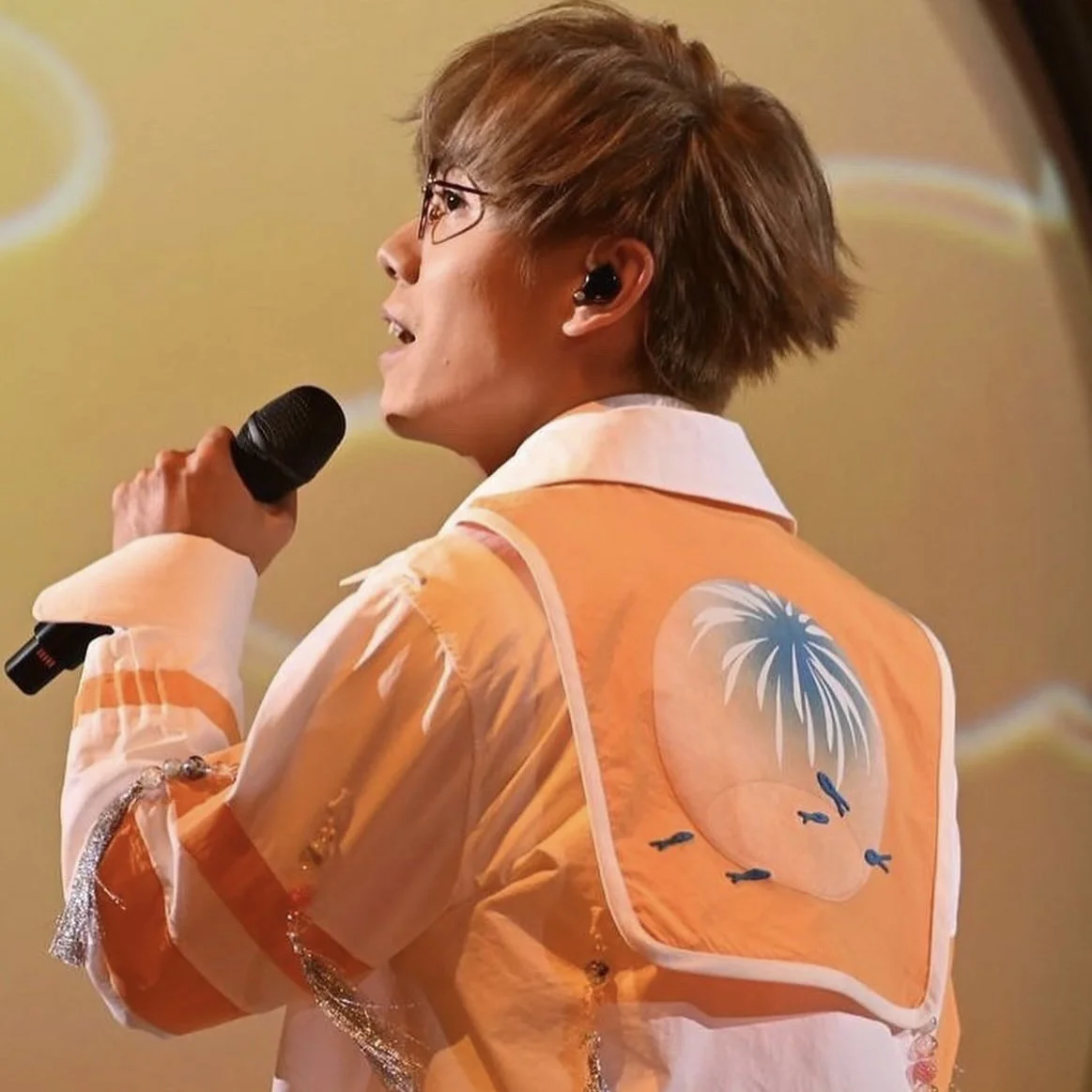
Wilsonkaki’s custom look for Hong Kong based singer Terence Lam during the 2022 SUMMER BLUES concert opening.
Globe-trotting past aside, Yip’s work as the founder and primary brain behind his brand Wilsonkaki, which produces off-the-rack garments available at wilsonkaki.com as well as custom, made to order pieces for performers; included but not limited to the above custom look created for Hong Kong singer-songwriter Terence Lam (@terencelam0903 on Instagram). Even when designing for performers two emblematic parts of Wilsonkaki’s style shine through: his “life-oriented” design and a bold, visible colour palette. The designer shares: “I don’t want these designs to feel like they were made only for the stage. I still want it to feel like something people will want to wear, and that will always be my ultimate goal.”
As many industry professionals agree, the line between fashion as a creative practice and a business is incredibly thin. There are countless guides on Substack and Instagram carousel posts detailing the experiences of the lucky few, who managed to break into the notoriously exclusive industry with nothing but the skin of their teeth, luck, and an ungodly amount of hours put into similarly thankless jobs. Being one of the only two HART Studio artists in the famously isolating fashion industry, Yip’s gratitude for the non-profit stems primarily from the space and resources it gives its creatives.
“I don’t think creativity exists in isolation. The connection between clothing and its wearers is deeply personal, but so is the connection between the designer and their community.”
“HART HAUS is not just a physical place for artists, and it gathers people from different backgrounds,” the designer shares, “We have painters here. We have sculptors here. There’s always ten to fifteen minutes a day where we leave our studios to talk to each other in the pantry or corridors.” Being someone who often prefers to carry out his creative process in solitude Yip firmly believes that the short window of socialisation is a key part in preventing him from fully isolating himself from the outside world, and HART HAUS’ community-oriented nature provides exactly that.
For the future, Yip hopes to work with more of HART HAUS’s artists in a setting where they can show off their craft, such as an annual showcase to foster interactions and deeper connections. He cites fellow HART Studio artist Nicholas Wong, who had previously worn some of his pieces in poetry recitals, before finishing off the interview by saying: “HART HAUS lets me give my art, the clothes I make, in exchange for connecting with others like me who want to give our work to the world. I’m always reminded by these people to have fun and that I’m very lucky to be able to do something that I like.”
To learn more about the Artist, click here.
About INSIDE HART
Inside HART is a window into our studio where artists experiment, collaborate, and bring their practice to life.
Stay tuned for other journals on the series!
